Hair Loss in Men vs Women: Why the Causes and Treatments Are Different

Dr. Lu Ying Shean
Founder, MU Scalp & Hair Growth Solutions
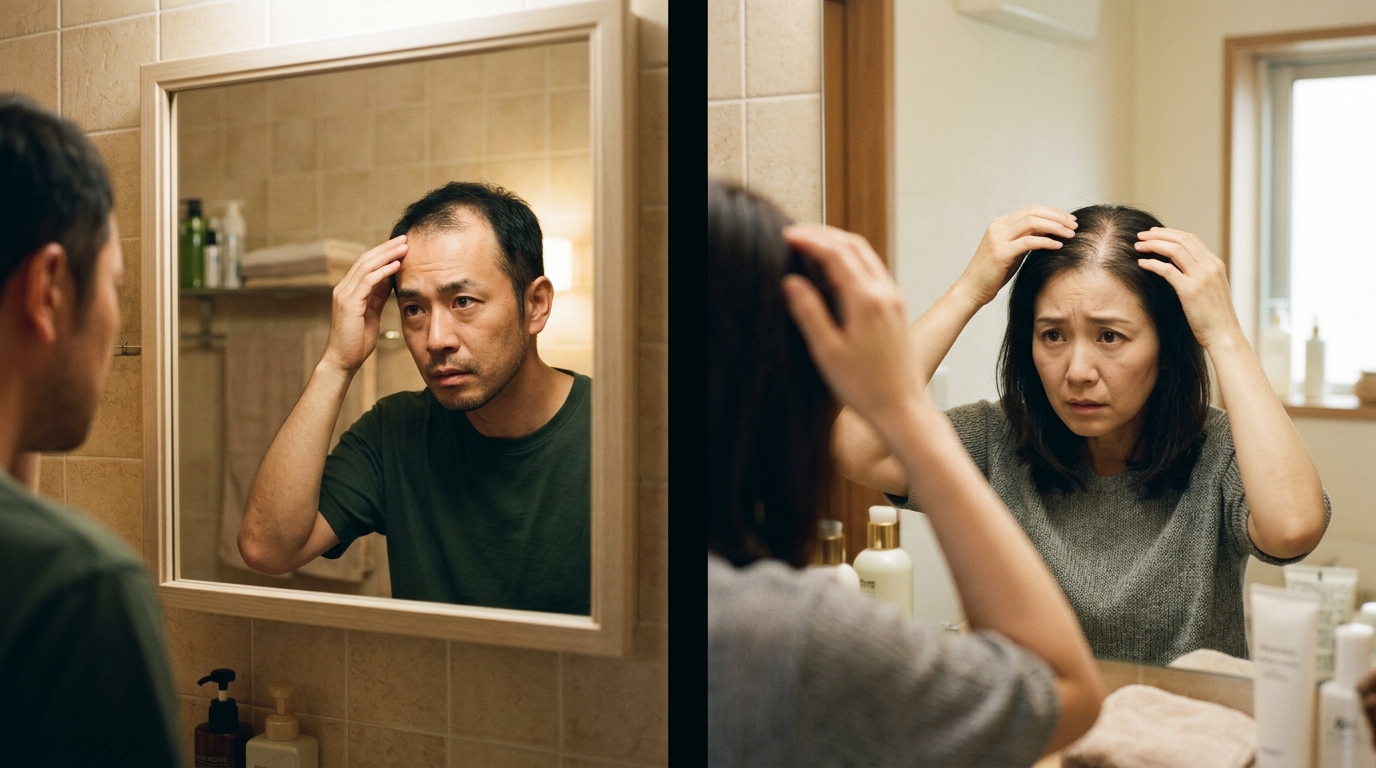
“I’m losing my hair” means something very different depending on whether a man or a woman says it. The patterns are different, the causes are often different, and the emotional impact can be different too.
At MU Scalp in Kota Kinabalu, roughly 60% of our clients are women — which surprises people who assume hair loss is mainly a male problem. The reality is that hair loss affects both genders in significant ways, but understanding the differences is key to getting the right treatment.
How Men Lose Hair
Male pattern hair loss (androgenetic alopecia) is the most common type in men, affecting up to 70% of men at some point in their lives. It follows a predictable pattern — starting with a receding hairline at the temples, thinning at the crown, and eventually connecting to form the classic horseshoe pattern.
The primary driver is dihydrotestosterone (DHT), a hormone derived from testosterone. DHT shrinks hair follicles over time, making hair progressively thinner and shorter until the follicle stops producing visible hair altogether. Genetics determine how sensitive your follicles are to DHT — which is why male pattern baldness runs in families.
Men’s hair loss typically starts in their 20s or 30s and progresses steadily. Because the pattern is distinctive and well-understood, diagnosis is usually straightforward. The earlier treatment begins, the more hair can be preserved.
How Women Lose Hair
Female pattern hair loss is more complex and more varied. Women rarely experience the same receding hairline or complete baldness that men do. Instead, the most common pattern is diffuse thinning — a gradual reduction in hair density across the top of the scalp, often first noticeable as a widening parting line.
What makes female hair loss more challenging to diagnose is that it has more potential causes. While hormones play a role, women also commonly experience hair loss from iron deficiency (especially with heavy periods), thyroid conditions, polycystic ovary syndrome (PCOS), postpartum hormonal shifts, menopause, chronic stress, crash dieting, and medication side effects.
This means that treating female hair loss often requires a broader investigation. At MU Scalp, we don’t just look at the scalp — we consider your full medical and lifestyle picture.
The Emotional Impact Differs Too
While hair loss is distressing for everyone, studies consistently show that women experience higher levels of emotional distress from hair thinning. Society normalizes male baldness to some degree — there are cultural models for it, even positive ones. For women, hair loss can feel more isolating because it’s less talked about and less visually “expected.”
Many women who visit our centre in KK have been silently dealing with thinning hair for months or years before seeking help. Some have been told “it’s just stress” or “it’ll grow back” without receiving a proper assessment. That’s why our consultations are designed to be thorough and validating — we take your concerns seriously from the first conversation.
Treatment Approaches Are Different
Because the underlying causes differ, treatment strategies also differ between men and women.
For men, treatment often focuses on addressing DHT sensitivity — through topical or systemic approaches that slow follicle miniaturization. The goal is usually to preserve existing hair and stimulate regrowth in areas where follicles are still active.
For women, treatment typically starts with identifying and addressing any underlying causes — nutritional deficiencies, hormonal imbalances, or scalp conditions. Once these are managed, targeted treatments can be used to support hair density and growth. Treatment plans for women tend to be more multifaceted.
At MU Scalp, every treatment plan is personalized regardless of gender. We don’t apply a one-size-fits-all protocol — because the same symptom (thinning hair) can have completely different causes from one person to the next.
When Both Genders Should Seek Help
The trigger points are similar: if you’re noticing progressive thinning that’s getting worse over months, seeing more scalp than you used to, finding more hair than usual in the shower, or if your hair loss started suddenly — it’s time for a professional assessment.
The key message for both men and women is the same: early intervention produces better results. Hair follicles that have been dormant for years are harder to reactivate than those that have only recently begun thinning.
Coming in as a Couple
It’s not uncommon for couples to visit MU Scalp together — sometimes one partner encourages the other to finally seek help, and sometimes both are dealing with hair concerns. We welcome this and can accommodate back-to-back consultations.
Dr. Lu Ying Shean is the founder of MU Scalp & Hair Growth Solutions in Kota Kinabalu, Sabah. Whether you’re a man or woman experiencing hair loss, book a consultation at +60 14-366 9770 to get a proper diagnosis and personalized treatment plan.
Related Services
Concerned About Your Hair?
Book a consultation with our team. We'll assess your condition and recommend the right approach — no obligation.
Book Consultation via WhatsApp