Alopecia Areata: What It Is and How It's Treated in Kota Kinabalu

Dr. Lu Ying Shean
Founder, MU Scalp & Hair Growth Solutions
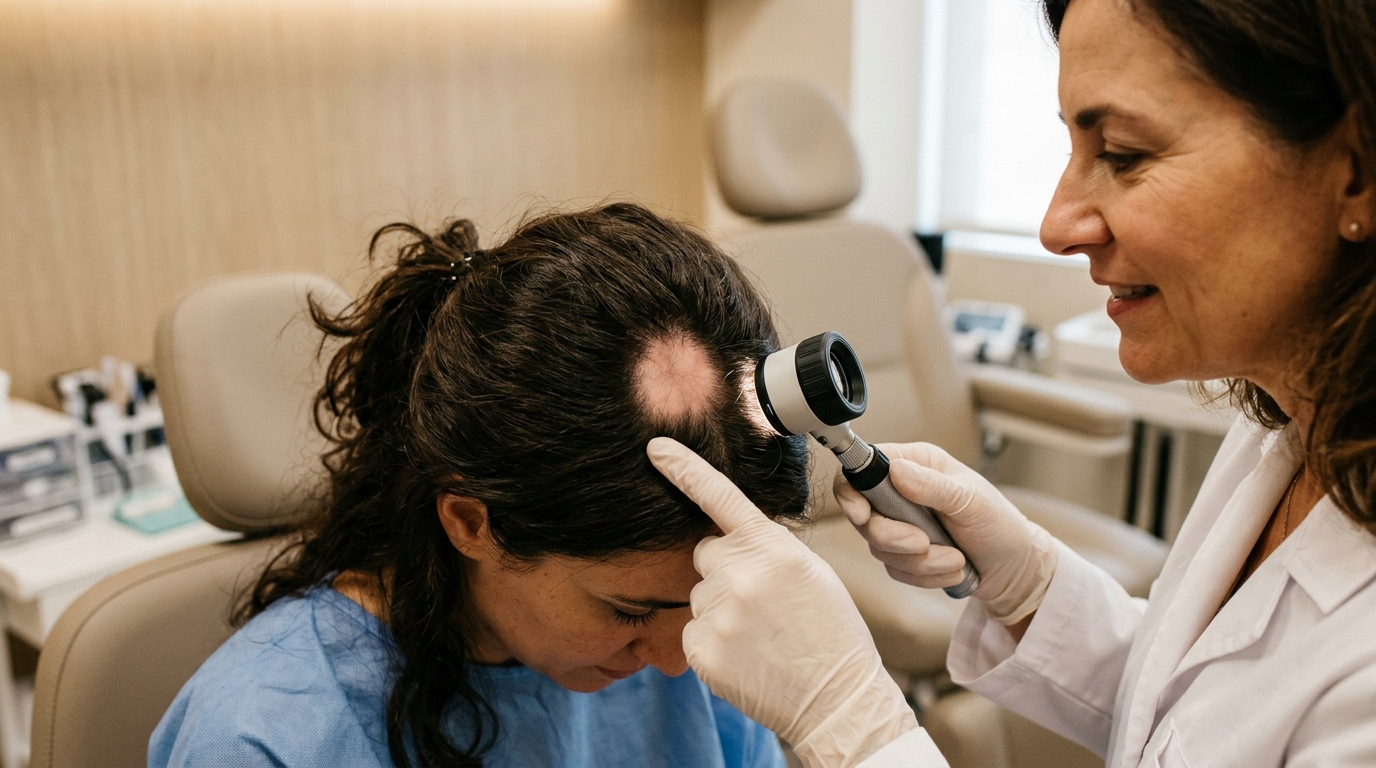
You’re brushing your hair one morning and notice something that wasn’t there before — a smooth, round patch of bare skin on your scalp. No redness, no itching, no warning. Just… gone.
This is the typical first encounter with alopecia areata, and it’s one of the conditions we diagnose and treat regularly at MU Scalp in Kota Kinabalu.
What Is Alopecia Areata?
Alopecia areata is an autoimmune condition where your body’s immune system mistakenly attacks your own hair follicles. The result is sudden, patchy hair loss — usually in round or oval spots about the size of a coin, though patches can be larger.
Unlike androgenetic alopecia (genetic pattern baldness), alopecia areata can affect anyone at any age. It’s not caused by stress alone, though stress can be a trigger. It’s not contagious. And importantly, the hair follicles aren’t destroyed — which means regrowth is possible with the right treatment.
How Common Is It?
Alopecia areata affects roughly 2% of people globally at some point in their lives. In our KK centre, we see cases across all age groups — from teenagers to adults in their 60s. Both men and women are equally affected, and it can occur in any ethnicity.
What Does Alopecia Areata Look Like?
The most common presentation is one or more round, smooth patches on the scalp where hair has fallen out completely. The skin underneath usually looks normal — no scarring, no redness, no scaling. Sometimes you might notice “exclamation point hairs” at the edges — short, broken hairs that are narrower at the base than the tip.
In more advanced cases, it can progress to:
- Alopecia totalis — complete loss of scalp hair
- Alopecia universalis — loss of all body hair
- Alopecia ophiasis — band-like pattern of loss around the sides and back of the scalp
Most cases, however, remain as one or a few patches — and many respond well to treatment.
What Causes It?
The exact cause isn’t fully understood, but we know it involves the immune system attacking hair follicles in a targeted way. Factors that may contribute include family history of autoimmune conditions, physical or emotional stress triggers, hormonal changes, and other autoimmune conditions like thyroid disease or vitiligo.
At MU Scalp, we don’t just look at the patches — we look at the whole person. Understanding your medical history, stress levels, and any underlying conditions helps us determine the best treatment approach for your specific case.
How We Diagnose It in Kota Kinabalu
When you visit our centre with suspected alopecia areata, we perform a thorough scalp analysis to examine the pattern, size, and distribution of hair loss. We look at the characteristics of the patches — the skin texture, presence of exclamation point hairs, and whether follicles appear intact.
In most cases, the visual pattern is distinctive enough for diagnosis. However, we may also discuss blood tests to check for thyroid function and other autoimmune markers, particularly if the patches are widespread or rapidly progressing.
A proper diagnosis is essential because patchy hair loss can sometimes be caused by other conditions — including fungal infections, traction alopecia, or scarring alopecia — each of which requires a different treatment approach.
Treatment Options
The good news about alopecia areata is that the follicles are not destroyed. They’re dormant, not dead. This means regrowth is possible — and in many cases, hair does regrow even without treatment, though the timeline is unpredictable.
At MU Scalp, we offer medically-guided treatment approaches that aim to calm the immune response and stimulate follicle activity. Your treatment plan is personalized based on the extent of your hair loss, how long you’ve had it, your age, and your overall health.
Treatment goals are realistic and honest: we aim to encourage regrowth, slow progression, and help you manage the condition long-term. Some patients see excellent regrowth; others experience stabilization. We’re always upfront about expectations.
When to See a Specialist
Don’t wait to see if patches “grow back on their own.” While spontaneous regrowth does happen, early treatment gives you the best chance of a faster, fuller recovery. The longer patches persist untreated, the more difficult regrowth can become.
If you’ve noticed round, smooth patches of hair loss — especially if they’re spreading or you have a family history of autoimmune conditions — a professional assessment is the right next step.
Living With Alopecia Areata
Beyond the physical effects, alopecia areata can significantly impact confidence and emotional wellbeing. We understand this at MU Scalp, and our consultations are designed to be supportive, not clinical. We take time to explain what’s happening, answer your questions, and involve you in treatment decisions.
Hair loss — especially sudden hair loss — is stressful. Having a clear diagnosis and a plan makes it more manageable.
Dr. Lu Ying Shean is the founder of MU Scalp & Hair Growth Solutions, located at Kolam Centre Phase 1, Jalan Lintas, Kota Kinabalu. For alopecia areata assessment and treatment, contact us at +60 14-366 9770.
Concerned About Your Hair?
Book a consultation with our team. We'll assess your condition and recommend the right approach — no obligation.
Book Consultation via WhatsApp